Written by Sorcha
I was unsure about going to Peru. I had heard about pick-pocketers from a friend. But when I heard about the trips and tours such as hiking with Llamas and touring around ancient Machu Picchu I changed my mind.
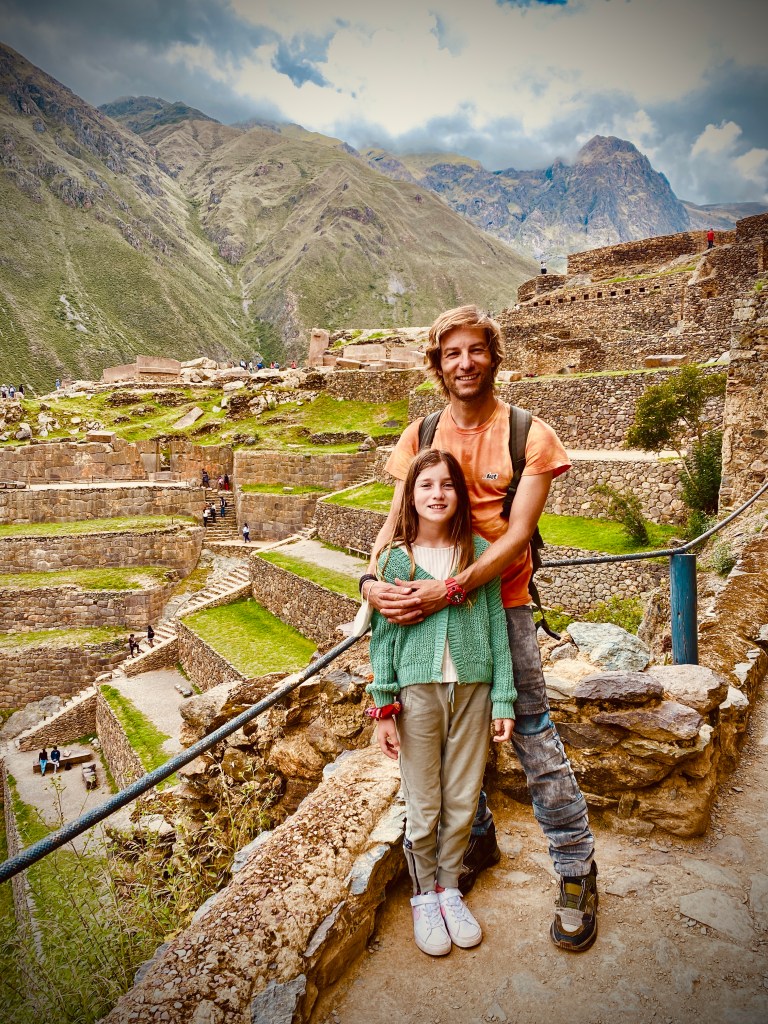
I really liked the train ride up Machu Picchu. It was a 2 hour journey along a gushing river that you really wouldn’t want to accidentally fall into! When we got to the town below Machu Picchu I couldn’t see any cars (which surprised me) except several buses ferrying people up and down Machu Picchu. The bus ride up you had a good view of the brown river below and thousands of trees surrounding its river bank. If you squinted you could even see the old Inca trail that weaved up and down, left and right through the evergreen trees. Some people go on a 4 to 5 day hike to get to Machu Picchu. We (thankfully) didn’t do this because its closed in February and who would want to go on a four to five day hike?
What is so special about Llamas and Alpacas?
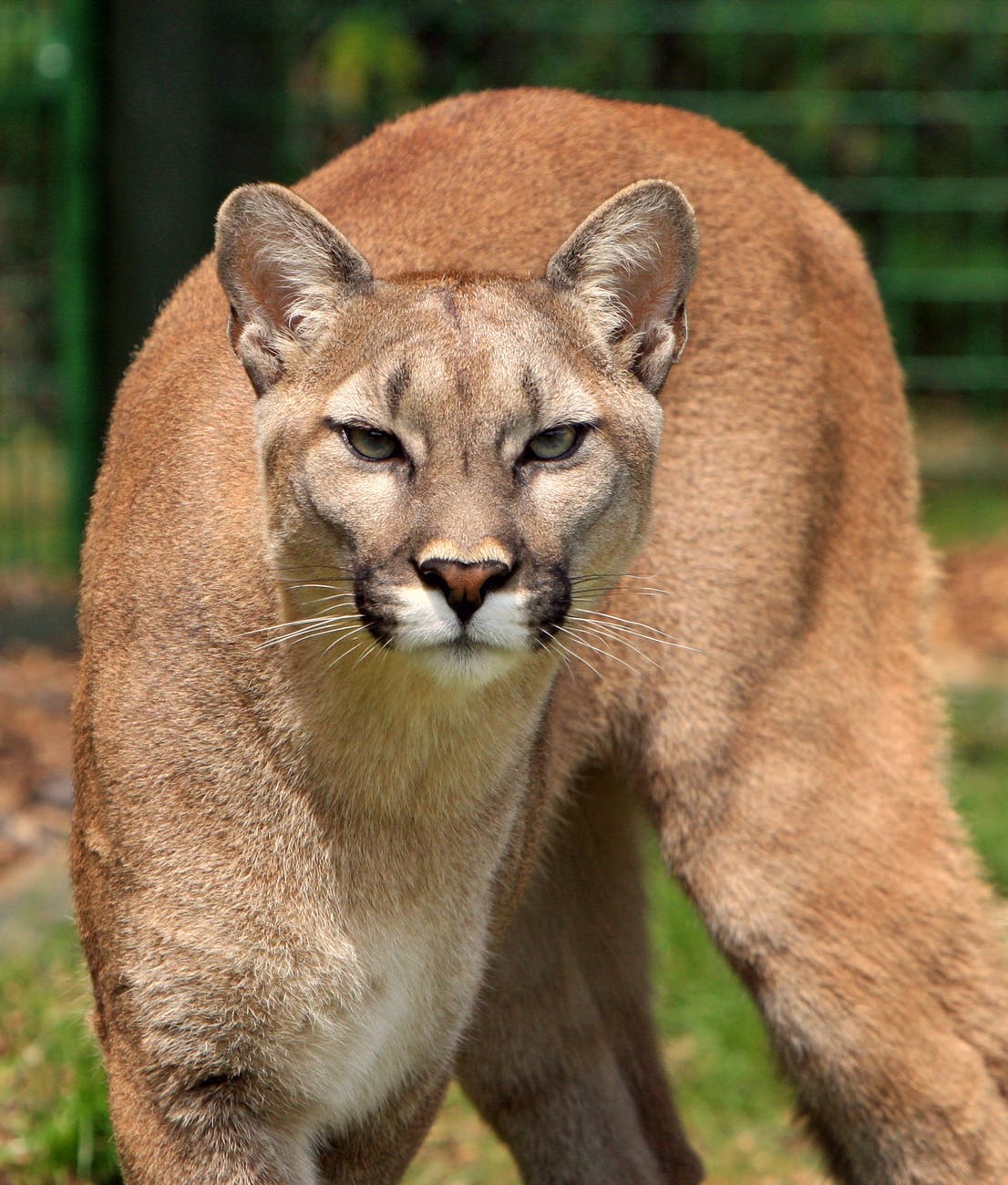
Llamas are a popular and common animal in Peru in fact some farms have nearly 450 llama. Llama and alpacas are commonly used for their wool and alpacas are even used for their meat. Llama and alpaca roam around the harsh climate of the Andes at 5,000-7,000 metres. Peru holds the great title of having 87% of the llama population in the world. This means there is plenty of food for the Andean Puma. It is a large feline that is both agile and silent. Sadly people often retaliate by shooting them.
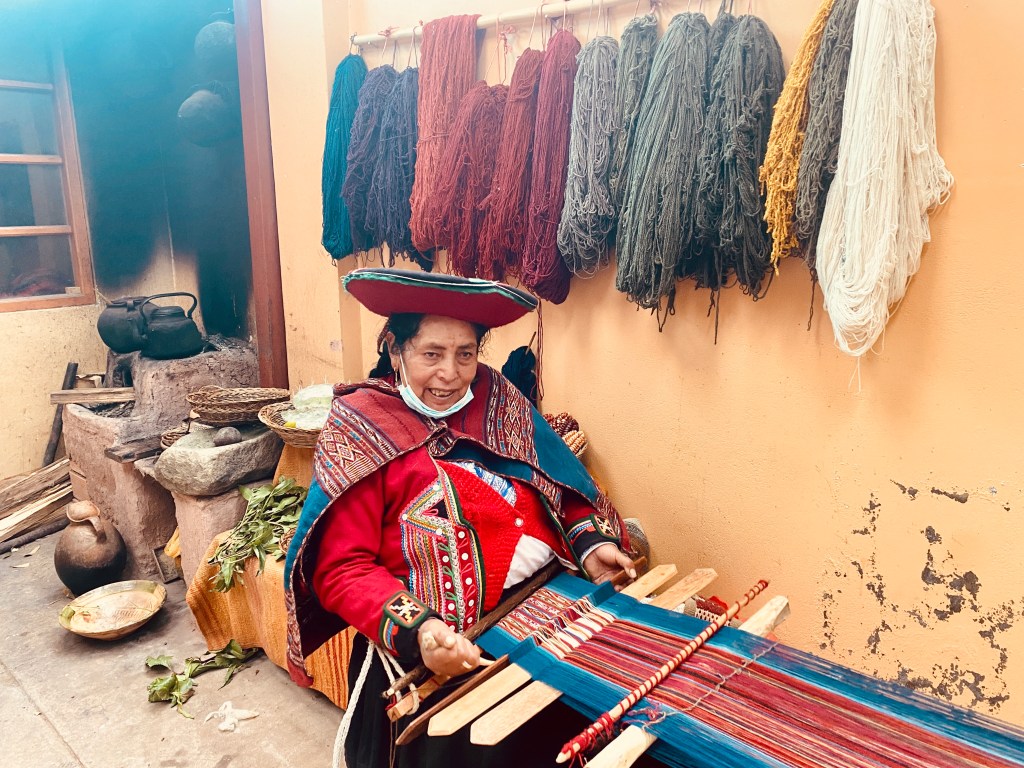
Llama And Alpaca Wool
Peruvian people use llama and alpaca wool for many things including: ponchos, scarfs, hats, bags, gloves and many more wonderful things. How do Peruvians make big fluffy wool into small soft thin pieces of string? They first dry the wool and clean it using roots from a plant called Sachaparakay. Then they use a kind of spinning machine called Ovillo to turn it into a strong thread. After spinning they use natural ingredients to dye the yarn such as Cochinilla (a really tiny insect that lives on a cacti) to make things red, flowers, corn and indigo. If the yarn becomes too much of one colour they use lemon juice to reduce it. They then either knit or weave the yarn to become a warm poncho or hat. Creating an item can takes a few days or even a few weeks. Peruvian native people do this process completely by hand.
Llama Hike
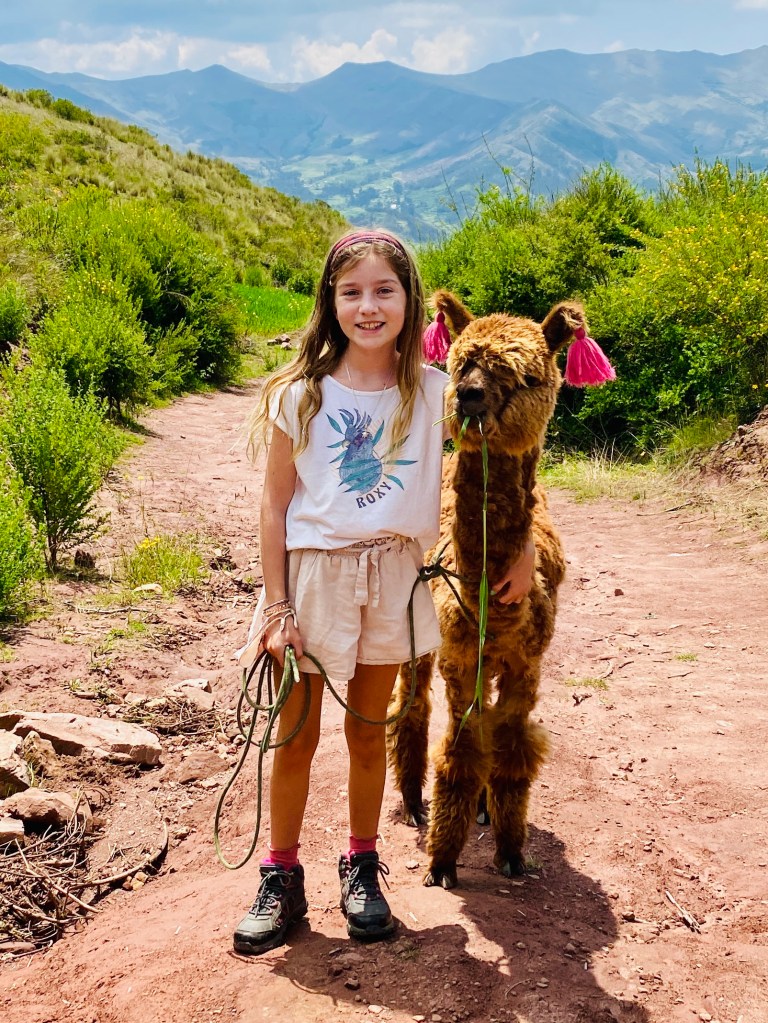
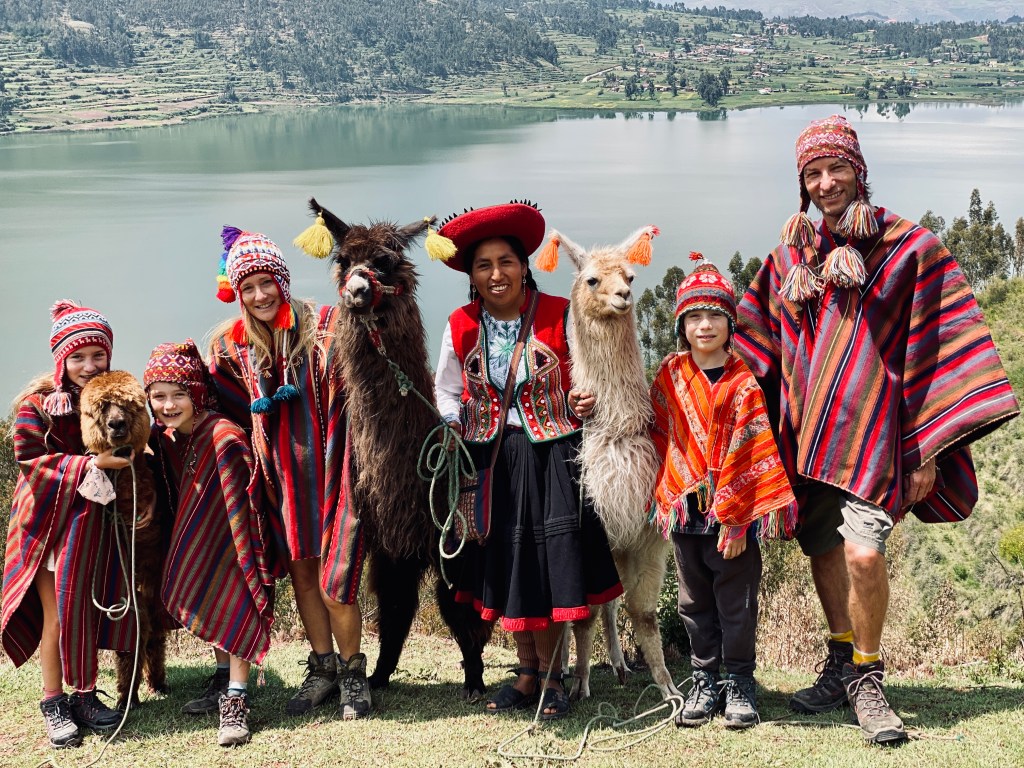
My favourite tour was ‘the Llama hike’. it was a walk up an old Inca trail 4,000 metres high with llama and alpaca in tow! There was 10 llamas and alpacas to chose from and Phoenix ran to choose a small baby llama who was quite bouncy. The alpaca I chose was a small brown one called Chocolate. On the hike the man guiding the walk told us about how Chocolate was just about to be shaved and her wool used for making warm clothes. He showed us the bits that needed to be shaved regularly: the calves and tummy. Chocolate was a calm animal that loved getting scratched on her neck and the occasional roll in the mud!
 Sky Yonder
Hey Sorcha, this looks so cool – you and Chocolate look like great friends!
What did you learn to weave? My Mum in NZ is a very keen weaver – I’m sure she would love to learn from Peruvian Weavers.
Did the Alpacas spit? I’ve heard they sometimes do that?!
LikeLike