Written by Sorcha
The Galapagos Islands are based on the coast of Ecuador. There are 13 major islands and around 125 islands altogether. The biggest of all the islands is called Isabela. It is roughly 80 miles long and has 6 active volcanoes.
On one of our first tour on Isabela we learnt about a phenomenon that happens every four years that really affects the Galapagos. It is called El Niño. El Nino is a weather event that affects the water temperature. It has a dramatic effect on the amount of food available and numbers of Penguins, Sea Lions, Iguanas, Blue Footed-Boobies, Flamingos and countless other wonderful animals are seriously affected.
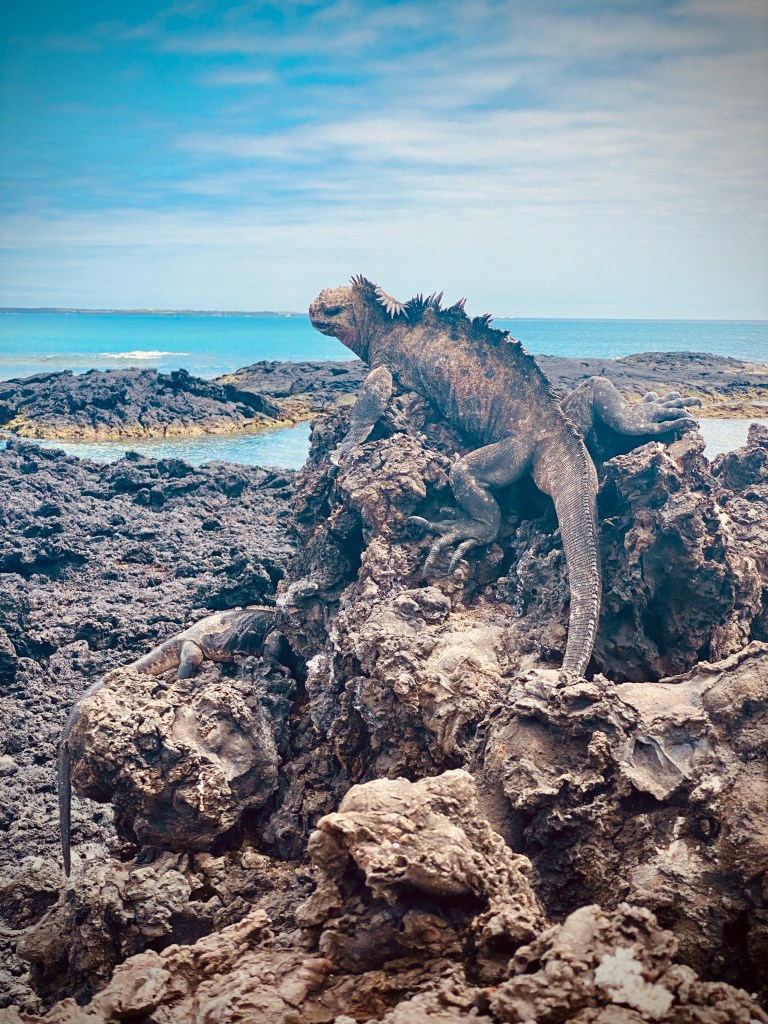
On our last tour we were lucky enough to encounter Flamingos! Our guide said there used to be over 100,000 Flamingo but they have been decreasing fast over the last few Ninos there are now under 1,000 Flamingo.
The opposite to el Nino is la Nina where for all the animals it is mating season as the cooler water brings back the sea food.
How Charles Darwin Came To His Theory
When in 1838, Charles Darwin visited his first island, San Cristobal, he found the Galapagos finch it had a short beak that was straight at the bottom and curved at the top. But on Floreana Island, he noticed the finches had longish pointed beaks that didn’t curve. He wondered why.
When Darwin came home (back to the UK) he wrote his book ‘The Origin Of Species’. It isn’t an exaggeration to say that Charles Darwin’s book was one of the most influential books in human history.
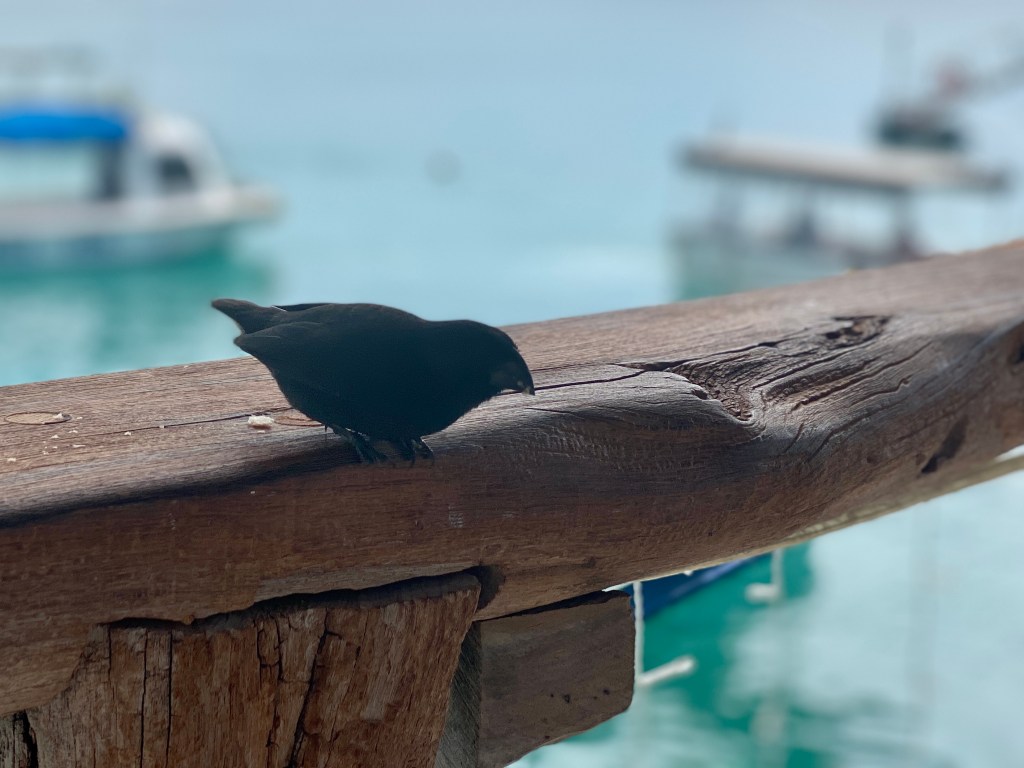
He noticed that the first finches ate nuts or berries whereas the second finch ate tiny cacti spikes or thin bugs. He came up with the idea that animals evolve depending on their immediate environment; natural selection. He noticed other animals were slightly different between the islands.
Lava Tunnels
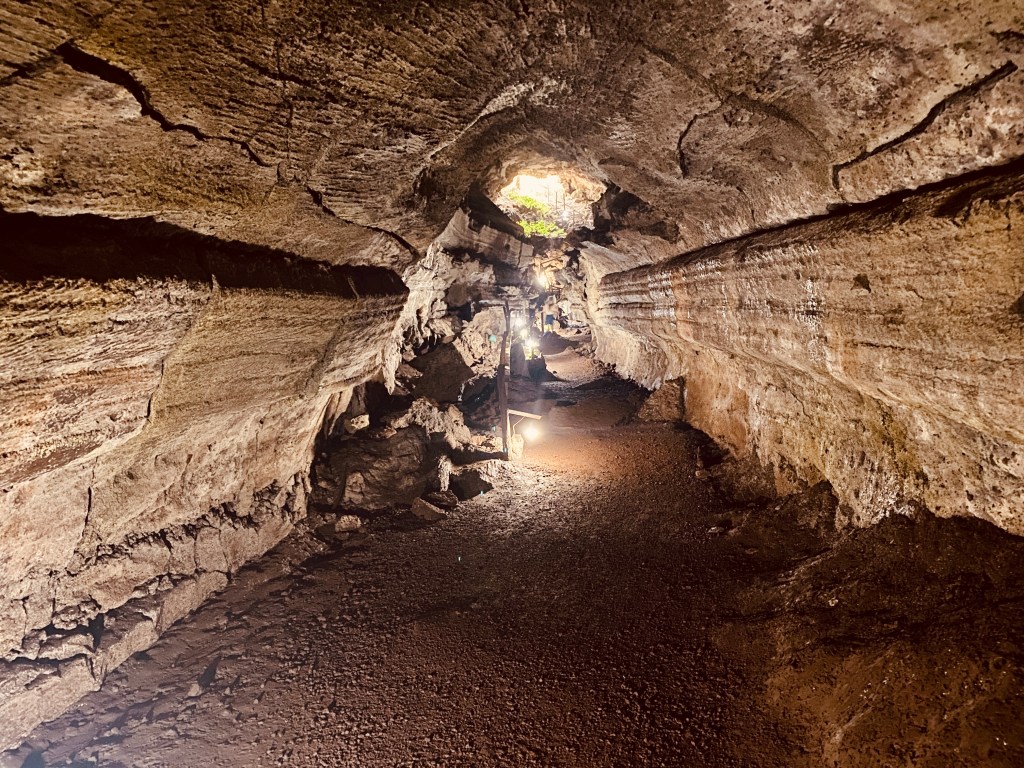
When we visited Santa Cruz Island we saw some wonderful lava tunnels. As you can guess from the word ‘lava’ theses tunnels were created by lava rivers. As the lava cools, the gases escape and create hollows in the rock. In our tour at Isabela, we swam through some Lava tunnels. Due to the tide the ceilings were quite low so I had to duck while we went under.
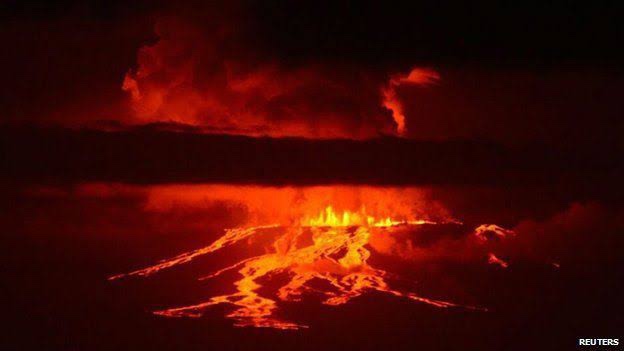
Wolf (A Volcano)
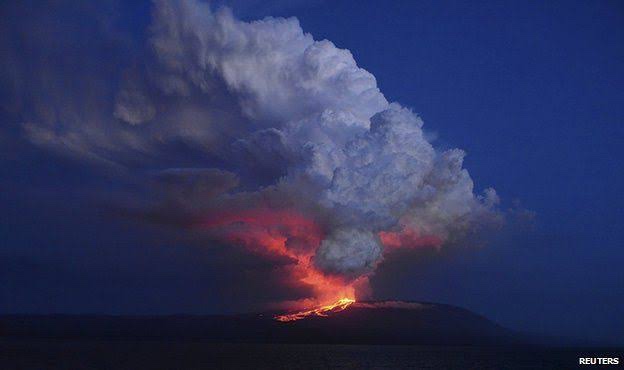
This particular volcano erupted on the island we were staying on! Luckily it was on the northern part of the island. Our guide showed us a photo of the eruption it was magnificent! Wolf is the most recent volcano to erupt in the Galapagos.
What I thought about the Galapagos
Going to the Galapagos was one of my many highlights of travelling so far. I was surprised about how friendly the animals are. You can go right up to the animals and they won’t run away!
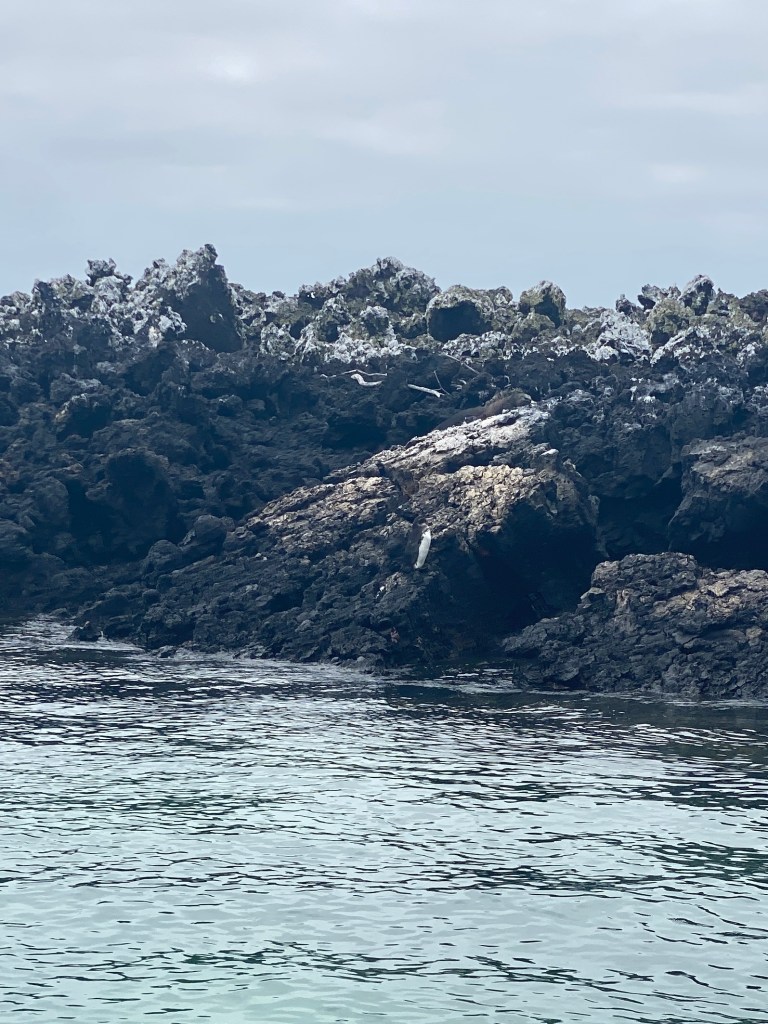
My favourite animal in the Galapagos is a Galapagos Penguin. After learning about it before hand in a geography lesson I really wanted to see one. We saw one on the rocks on Isabela Island.
Going to one of the most different places in the world scared me because I kept thinking what is it going to be like? Will the people be very different? What about the food? Would I have to eat sea food all day? In reality, going there made me realise that the people weren’t very different to other people I know and that I did not have to eat sea food all day.

 Sky Yonder