Written by Phoenix
Costa Rica is a hot country with different types of rainforest and habitats which means they have many tropical animals. We have been lucky to see many weird and wonderful animals already. Here are some of my favourites.
One of my favourite tropical animals is the Howler monkey. Howler monkeys are very loud creatures and when I mean very loud I mean very loud. Check out the video below and make sure the volume is up.
The howler monkeys were in our garden and they woke us up every morning.
Howler monkeys are the second loudest animal in the world they can howl over 3 miles in thick jungle. Baby howler monkeys are called infants. Howler monkeys can run 18 miles per hour and infants can run 11.2 miles per hour. Howler monkeys howl when they cry. Female howler monkeys have one baby a year. Howler monkeys sleep on big trees and the babies sleep on their mums back. Once the baby is around 7 months old it will get off its’ mums back starts climbing trees itself.
Morpho Butterfly

Frogs
On one of our walks we saw a little poisonous frog called a Blue Jeans Dart Frog. They can’t kill you but if you don’t wash your hands you will get a sore hand and maybe feel unwell for the day. We heard it before we saw it. It is tiny (about 2cm long). We also saw a Black and Green Poison Dart Frog (see below).
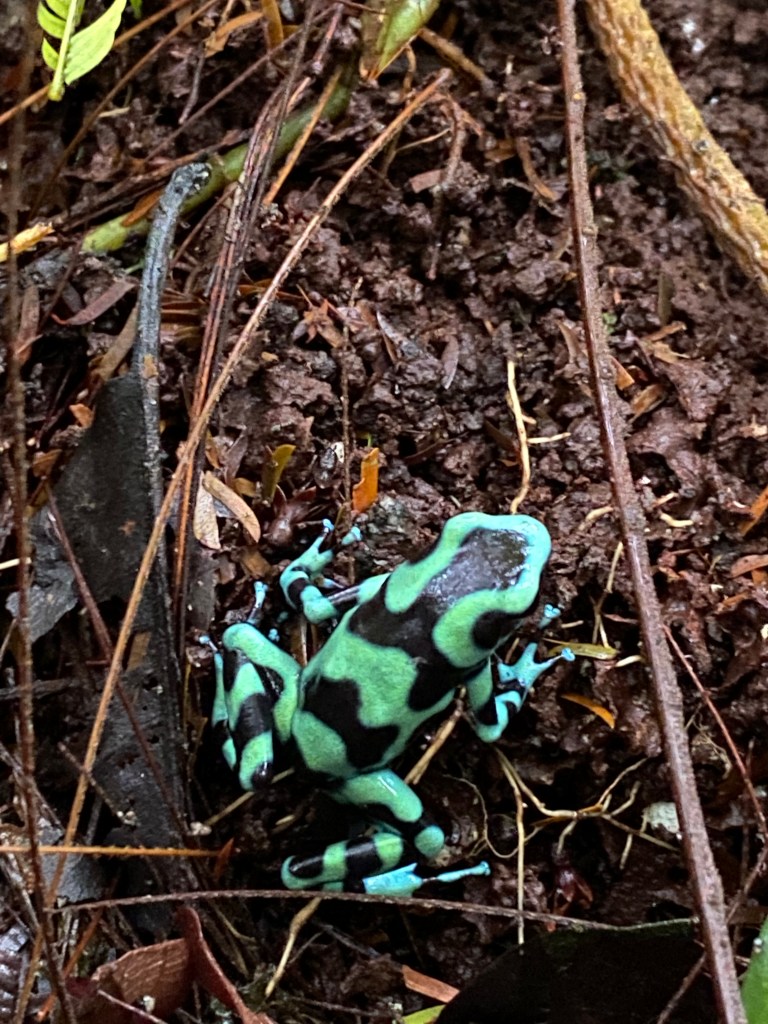

Blue Jeans Frog 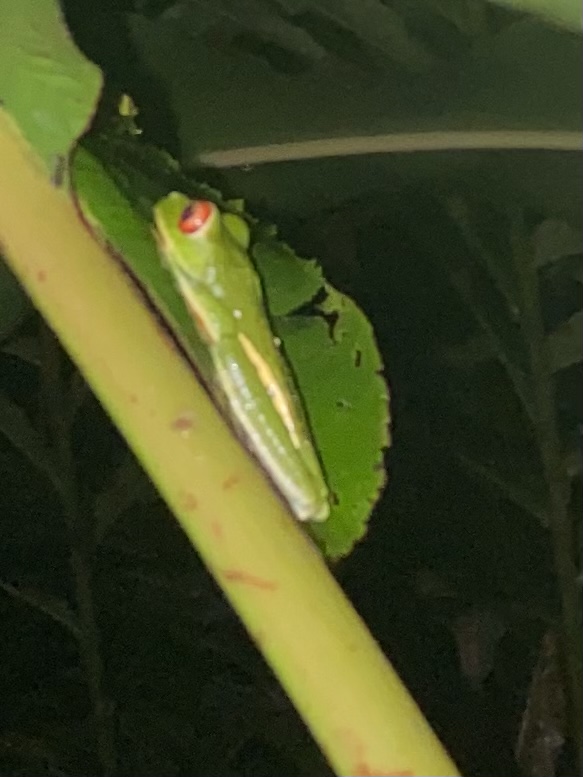
Red Eyed Tree Frog
One of the most interesting frogs we saw was the Red Eyed Tree frog. It is nocturnal so it means they only come out at night. You can see them sleeping under leaves in the day. There are two types of frogs – they either direct or indirect reproducers…
Hummingbirds
There are over 50 species of hummingbirds in Costa Rica.
Hummingbirds have co-evolved with flowers and plants, developing long slender bills and even longer tongues to feed on nectar. Because flowers regularly bloom and fade, most hummingbirds lead somewhat solitary lives, aggressively defending nectar sources from rival hummers, bees and butterflies. They also eat insects to help supplement fat and protein in their diet.
The smallest Costa Rican hummingbird is the male scintillant hummingbird, which weighs in at just two grams. At 11.5 grams, the violet sabrewing is the largest – its brilliant violet head and body contrasted by dark green wings.
Here is a video we took in slow-mo and their wings are still beating fast!
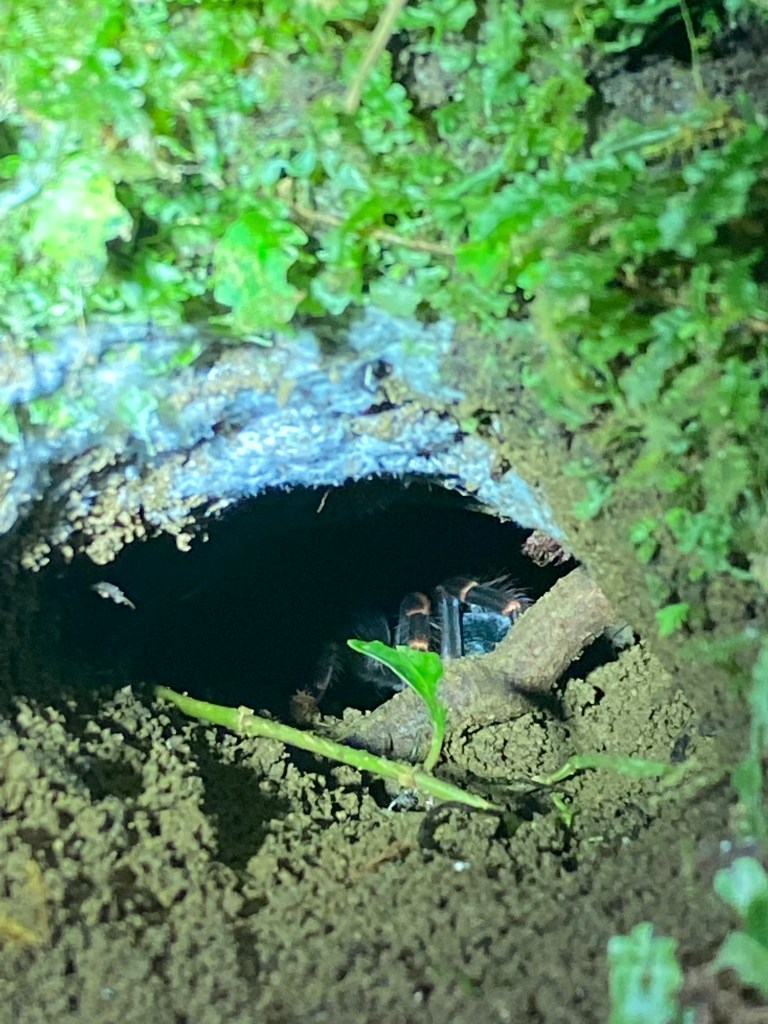
Orange-Kneed Tarantula]
We spotted a 10cm hole on the side of a bank which had fresh earth at its opening. We shone a torch inside and surprisingly we saw an Orange-Kneed tarantula. The orange-kneed tarantula is nocturnal and when it is hunting for food it stands at the entrance to its burrow and eats anything that goes past. It is quite rare and is found in cloud forests. We saw it in the Monteverde Cloud Forest. It has fangs under its head and its venom is not fatal. It has to rear up to kill its prey.
Ferdilance Snake
The Ferdilance is the most poisonous snake in Costa Rica. If you stand on it or disturb it, it will bite you and you will have to go to hospital within the hour otherwise your body will start de-composing and you will die. This Ferdilance was on the edge of the path camouflage in the fallen branches. We had to stay 2m away from it so we didn’t get bitten.
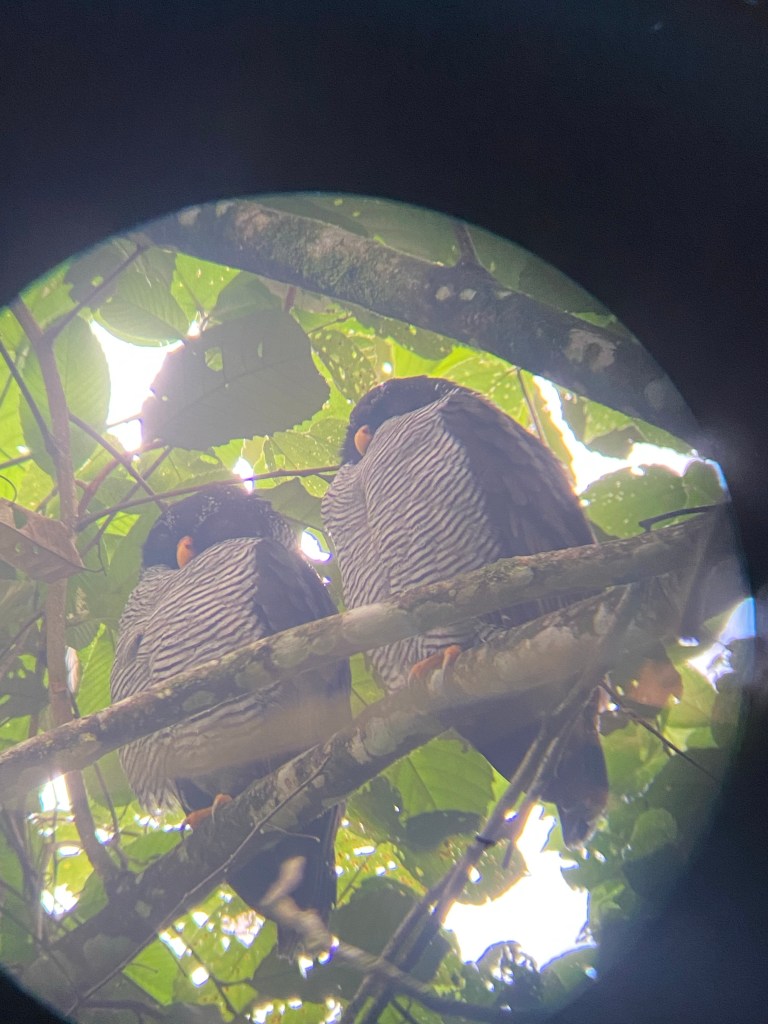
Black and White Owl
These are very rare and we were very lucky to see them. These Black and White owls like big primary rainforest trees. They mainly eat insects and bats. They are sleeping under leaves as they are nocturnal.
Toucans
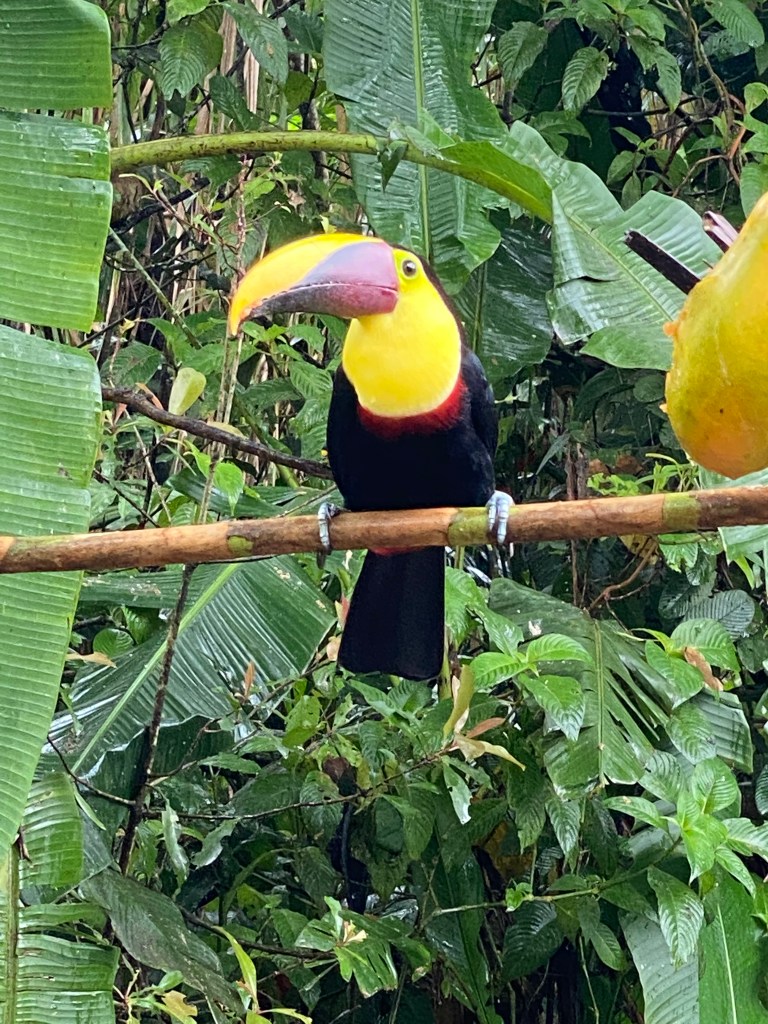
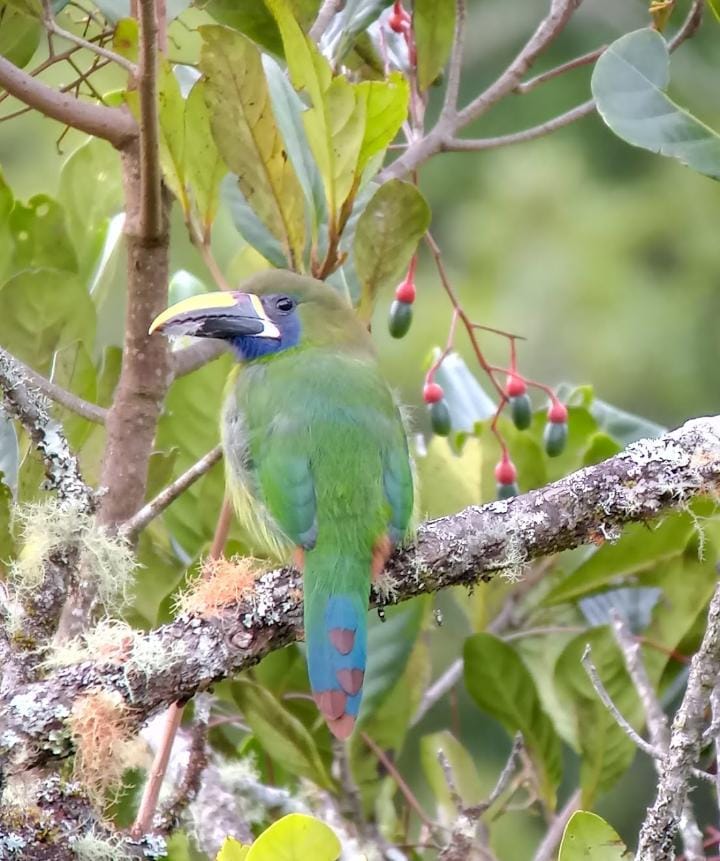
This is the biggest toucan you can get in Costa Rica and it is called the Black Mandibled-Toucan. A guide saw a toucan in the tree nearby so he came up to us and he said, ‘Do you want me to do a toucan dance to make a toucan appear?’ and we said ‘ok’. He did a weird dance and then as if by magic the toucan appeared. But we sussed out his trick!
Quetzel
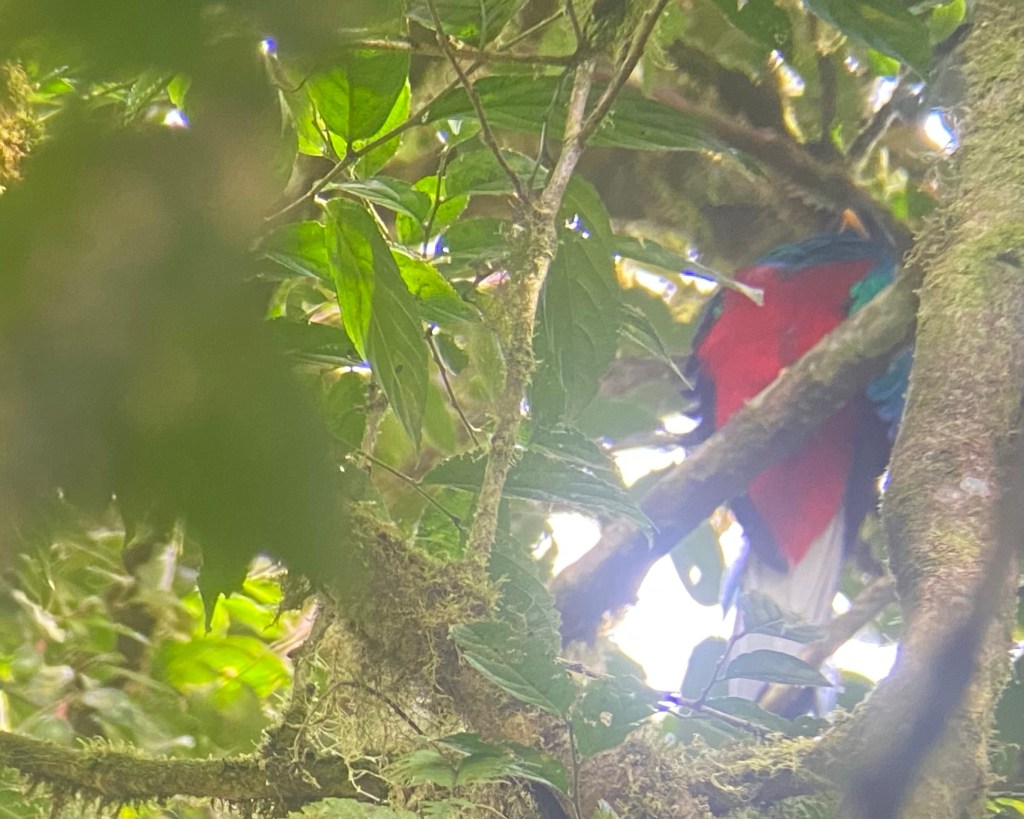
We learnt about these birds when we were learning about Mayans in school and I never imagined I would actually see one. We learnt that people see these birds as the son of God. They have beautiful long curly tails. The main thing we wanted to see was a quetzal and we were hoping to see a male birds as they are the most beautiful. We were extremely lucky to see both a male and a female.
Coati (Pizote)
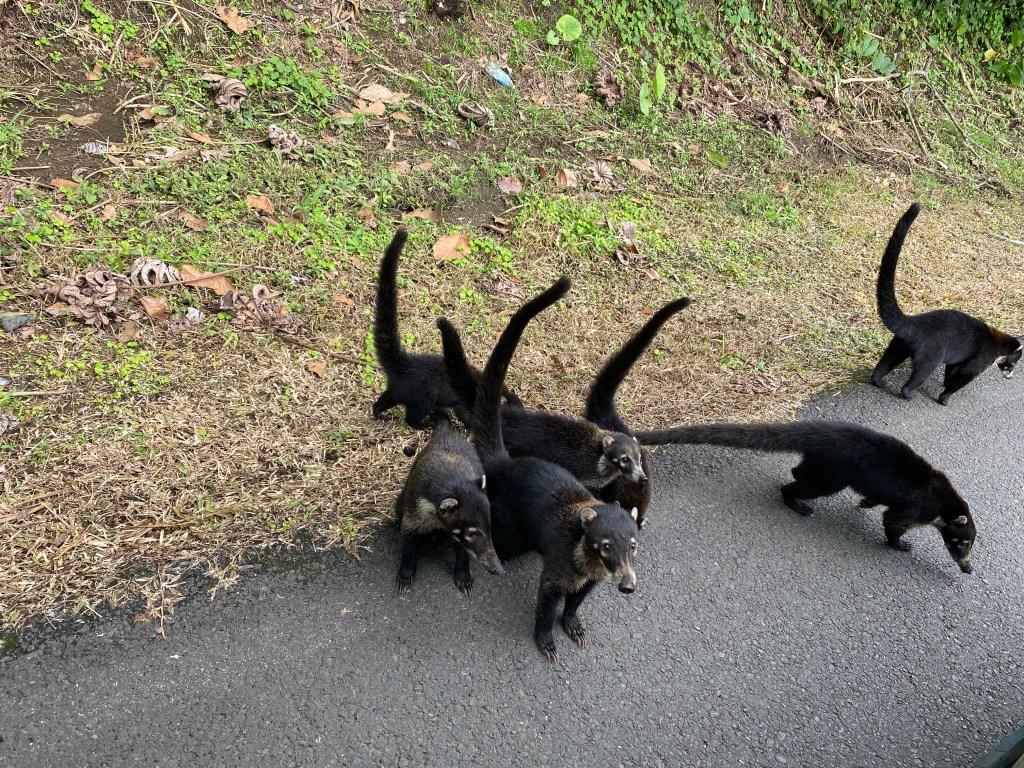
When we were driving we were greeted by a pack of Coatis on the road. Coatis eat tarantulas and are very friendly. They nearly jumped into our car because they wanted food. They are mostly found in rainforests and cloud forests and they are also common in wetlands.
I am enjoying seeing all these animals and traveling it is such an expeireance hanging out with my family and having so much fun.😃
 Sky Yonder
Hello Phoenix
Goodness me that was a lot of information and writing…
I loved reading it… you have seen so many weird and wonderful creatures… so good that you are learning all about them and absorbing it all
How lucky you are to be able to see it all first hand
Keep writing!!!
Lots of love
Grandma 👵 xxxx
Sent from my iPhone
LikeLike
Hey Phoenix,
Sounds like Costa Rica has lots of creatures that are a bit dangerous! Do you find it a bit scary sometimes?
I like the sound of the howler monkeys, you’re right – they are LOUD! I played the video and it made my dogs go crazy!!
Lots of love,
Kelsey
LikeLike
That was amazing
LikeLike